
Holiday Safety Tips for Pets
The holidays are here! Snowy walks, festive meals, twinkling lights, and plenty of time spent with the ones we love. At Coal Creek Animal Hospital, we know your pets are family, which is why their safety matters just as much as your own during this busy time of year.
Colorado’s winter weather can be unpredictable, and with holiday gatherings, rich foods, and cold temperatures, there are seasonal risks that every pet parent should keep in mind.
With a little planning, you can help ensure that your pets enjoy the celebrations safely.
Festive Foods
Holiday meals are delicious for us, but potentially dangerous for pets. Many classic seasonal foods can cause stomach upset, pancreatitis, or even life-threatening toxicity.
Foods to Keep Out of Paw’s Reach:
- Chocolate and cocoa (toxic to dogs and cats)
- Xylitol-sweetened treats (found in sugar-free desserts and gum)
- Bones from turkey or ham—they splinter easily and can cause choking or internal
injury - Fatty foods like gravy, skin, or table scraps (common causes of pancreatitis)
- Onions, garlic, leeks—often found in stuffing and holiday dishes
- Alcohol or unbaked dough containing yeast
- Macadamia nuts
Remember: sudden diet changes, even healthy ones, can upset your pet’s stomach, so keep treats minimal.
To ensure these treats are out of paw reach, trash cans should be sealed and placed in hard-to-reach areas. After preparing meals with bones or fatty foods, it is best practice to discard these scraps immediately in outdoor trashcans.
What to Do If Your Pet Eats Something Dangerous
If you suspect your pet has eaten a toxic food or substance, contact:
- An emergency animal hospital
- The ASPCA Animal Poison Control Center: (888) 426-4435
- Pet Poison Hotline: (855) 764-7661
Cold Weather Safety
Colorado winters are beautiful, but the temperatures can be hard on our furry friends.
Protect Those Paws
Ice, snow, and de-icing salts can irritate paw pads.
We recommend:
- Wiping your pet’s paws after walks
- Using pet-safe paw balm
- Considering booties for dogs who tolerate them
Know the “Danger Zone” Temps
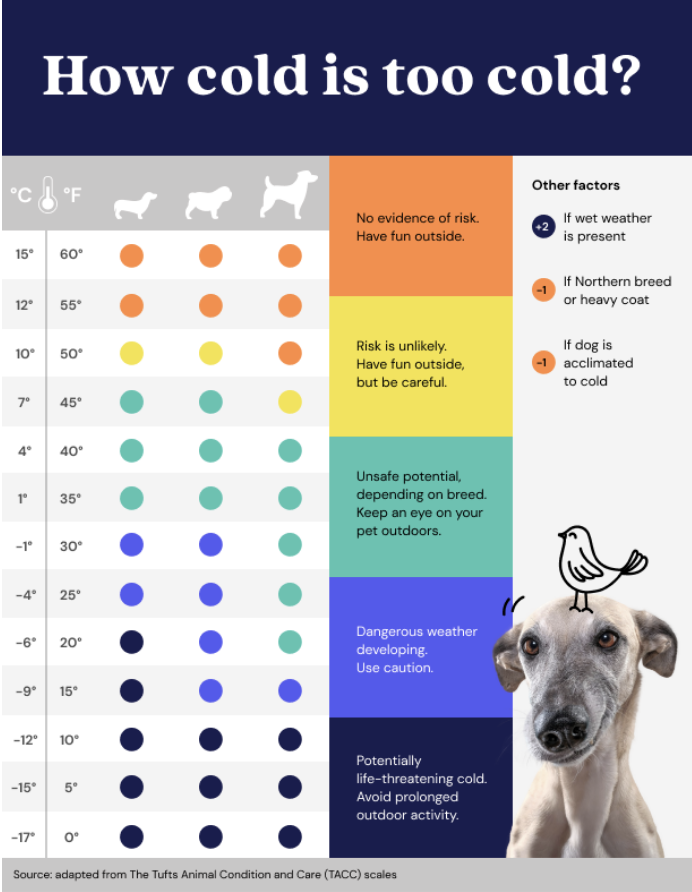
According to veterinary guidance, small dogs hit the danger zone at 20°F, and medium/large dogs at 10°F—including windchill.
If it’s wet outside (snow or sleet), add 10°F, since moisture pulls heat from the body faster. In dry conditions between 20–30°F, most small and medium dogs should stay out no more than 20 minutes, and larger dogs about 30 minutes.
Bundle Up (If Needed)
Short-haired breeds, seniors, and puppies can struggle in cold weather. A winter coat or sweater can help them stay comfortable on chilly days.
Limit Outdoor Time
Even snow-loving breeds can get hypothermia. Keep walking shorter during cold snaps and watch for shivering, lifting paws, or reluctance to move, all signs your pet is too cold.
Beware Antifreeze Toxicity:
Antifreeze has a sweet taste but is extremely toxic. Check your garage and driveway for spills. De-icing salts can also be harmful if ingested and irritating to paws.
Holiday Décor: Pretty but Potentially Risky
Decorating the house brings holiday cheer—but some decorations can be hazardous to pets.
- Tinsel: Cats love to bat at it, but ingestion can cause dangerous intestinal
blockages. - Ornaments: Glass ornaments can break and cause cuts; small ornaments can be
swallowed. - Holiday lights: Curious pets may chew cords, risking burns or electric shock.
- Seasonal plants: Poinsettias, holly, lilies, and mistletoe can be toxic if eaten.
If you have a pets-who-get-into-everything type, consider pet-proofing the lower half of your tree and securing cords out of reach.
Wishing You a Safe & Cozy Holiday Season
If you have questions about winter safety, nutrition, or cold-weather care, give us a call.
Warm wishes from all of us,
The Team at Coal Creek Animal Hospital
For more information on holiday safety, visit:
ASPCA: https://www.aspca.org/pet-care/general-pet-care/cold-weather-safety-tips
The Red Cross: https://www.redcross.org/get-help/how-to-prepare-for-emergencies/pet-
winter-safety.html?srsltid=AfmBOopRDaZ39yxOgIAmCmD5vVLf0HdBqXNyh2tOAqgIfVaItN2DChXu
Pet Poison Hotline: https://www.petpoisonhelpline.com/blog/holiday-winter-toxins/
American Veterinary Medical Association: https://www.avma.org/resources-tools/pet-owners/petcare/holiday-pet-safety